
Trucking Services
We deliver materials using our own fleet of trucks, and a network of approved contract drivers throughout Texas. Customers can also pick up materials by bringing their trucks to our yard for loading.
Belly Dumps
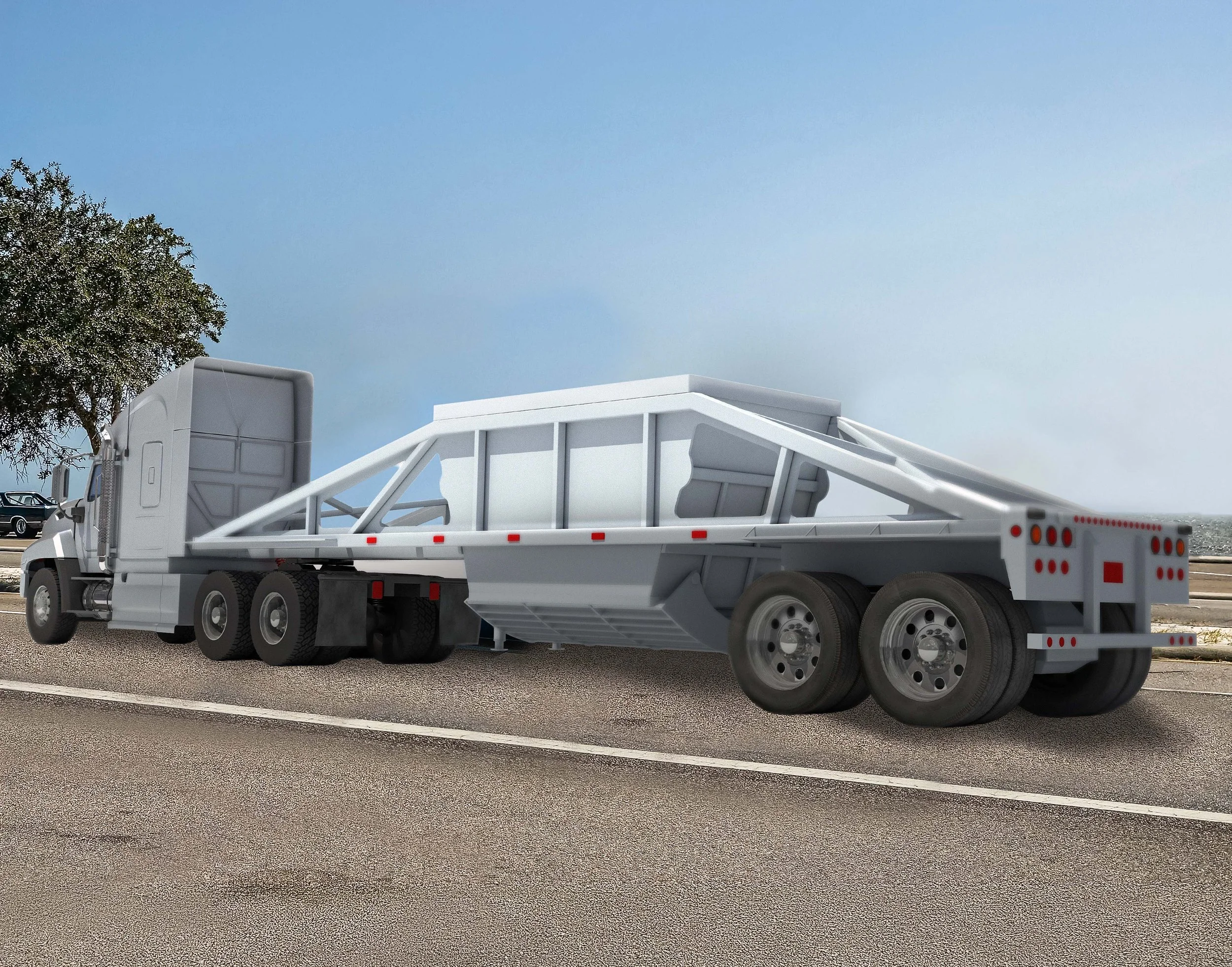
Belly Dump Trailers (aka, ‘belly dumper’ or ‘bottom dump trailer’) are semi-trailer designed to unload bulk materials from the bottom/underside of the trailer rather than by tilting the bed like a standard dump truck. The trailer has hinged doors or gates along the underside (the "belly") that open to release material straight down onto the road or ground.
-
Advantages: Drivers can control the gate opening to spread material in a continuous, even windrow (line) as the truck drives forward, which is especially useful for road paving and base material.
Spreading aggregate, gravel, sand, or asphalt base material evenly along roadways
Hauling large volumes of bulk materials for construction and paving projects
Preferred in situations where a precise, continuous line of material is needed rather than a single pile
Faster unloading than end dumps
More precise material placement, especially useful in road construction
Trade-offs:
Can't dump into confined or elevated spaces the way an end dump can (since it just drops straight down)
Requires enough ground clearance to operate the discharge gates
End Dumps
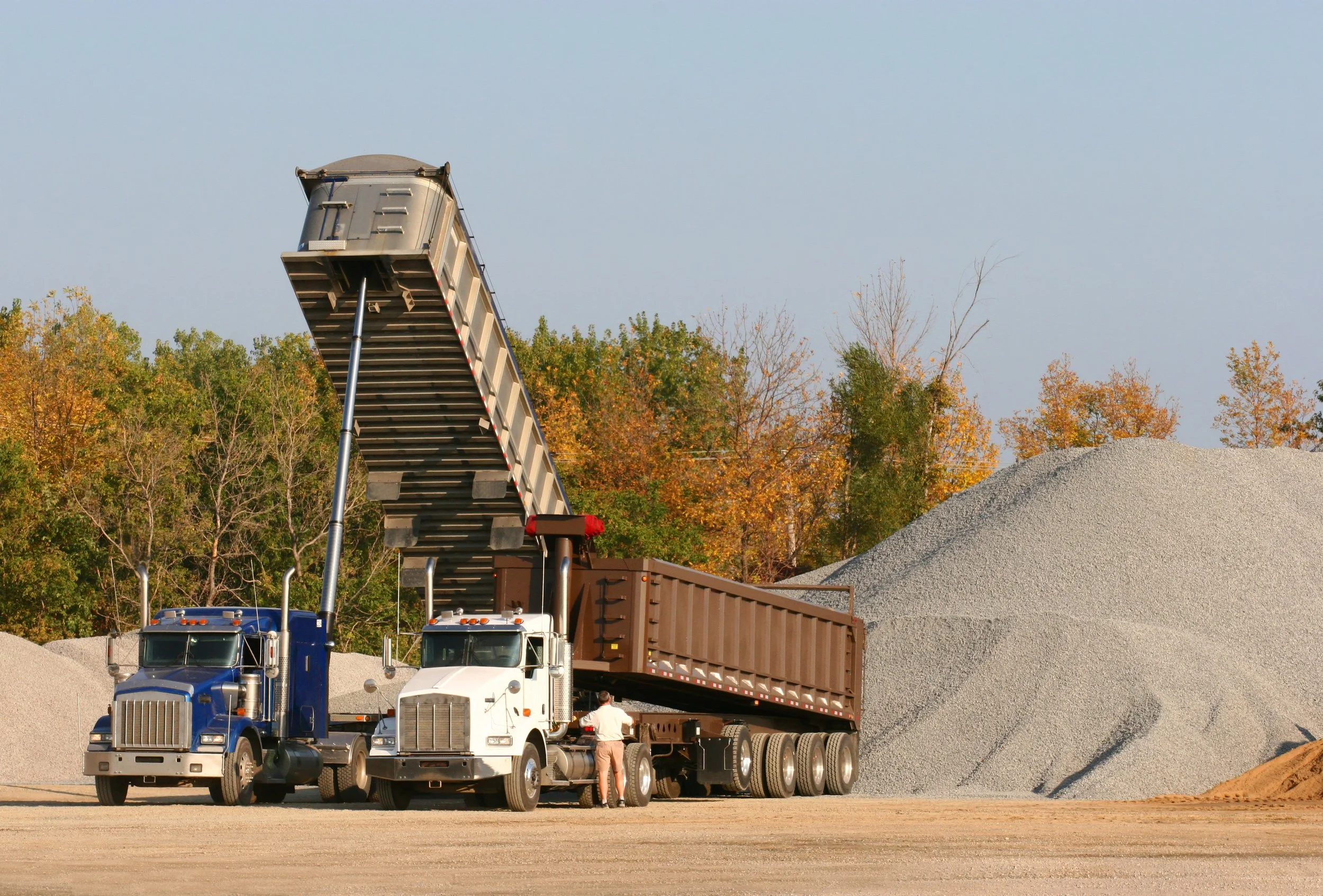
End dump trailers are large capacity trailers that unload bulk material by tilting the trailer bed upward at the rear, causing material to slide out and dump from the back.
-
Advantages:
Versatile for a wide range of material types - dirt, gravel, sand, demolition debris, asphalt millings, and other loose bulk materials
Dumping into confined spaces, over embankments, or into piles/pits — since the material dumps in one concentrated spot rather than spreading in a line
Can dump into elevated or tight spaces (like over a hopper or into a pit) since it doesn't need bottom clearance
Trade-offs:
Higher center of gravity when the bed is raised is a tip-over risk — especially on uneven ground, in wind, or if the load is unevenly distributed or sticky (won't slide out evenly)
Slower unloading process compared to a belly dump, since it has to fully raise, dump, and lower again
Needs overhead clearance to fully raise the bed, so it's not ideal under power lines, in buildings, or other low-clearance areas
Tri-Axles & Tandems
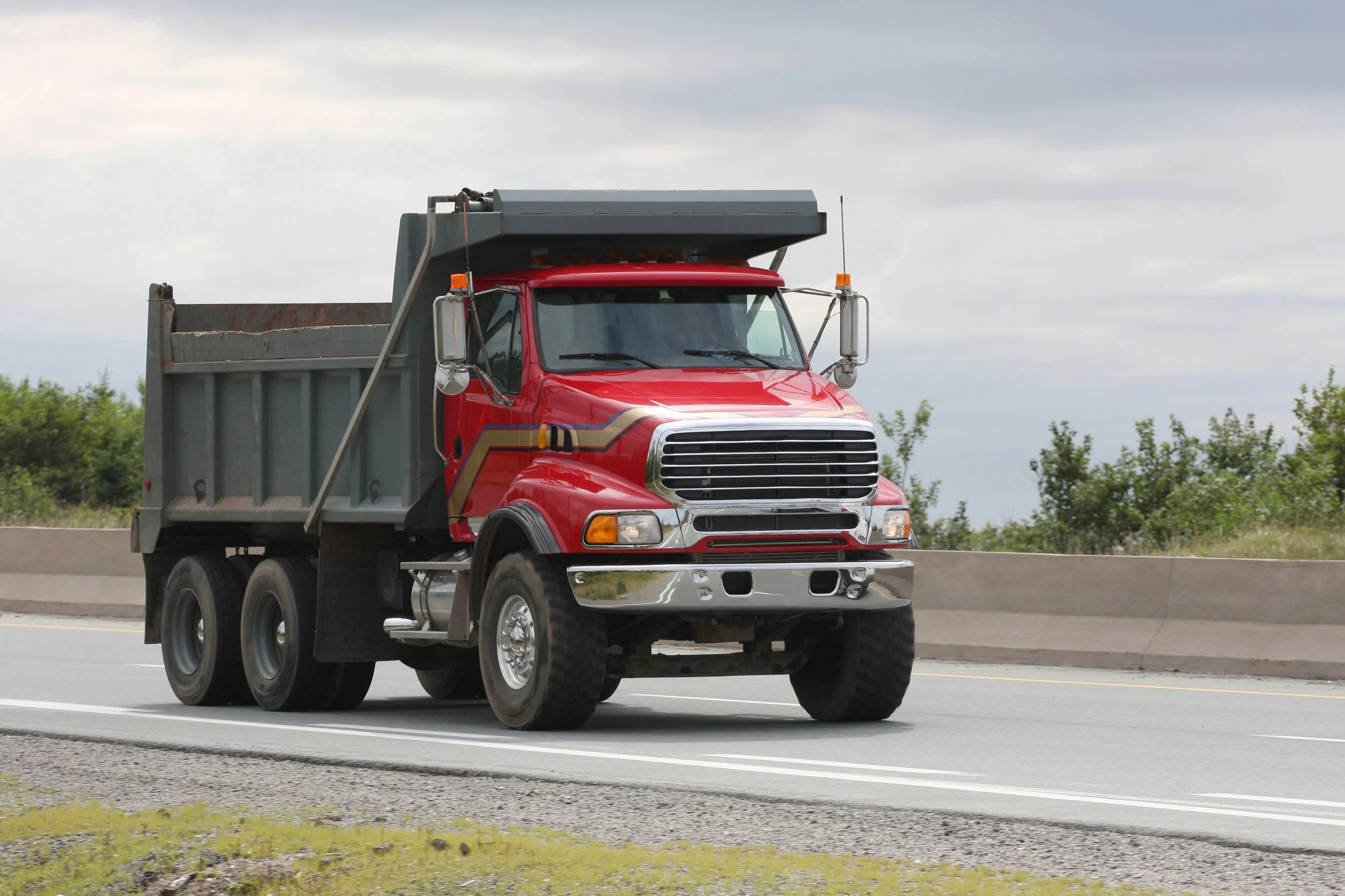
Tandem-axle and Tri-axle Dump Trucks are common dump truck configurations, differing by axle count, which affects legal weight capacity and job suitability.
A tandem-axle truck is the nimble, cost-effective choice for smaller or access-restricted jobs, while a tri-axle truck trades some maneuverability for significantly more hauling capacity for larger-scale construction and earthmoving work where efficiency per load matters most.
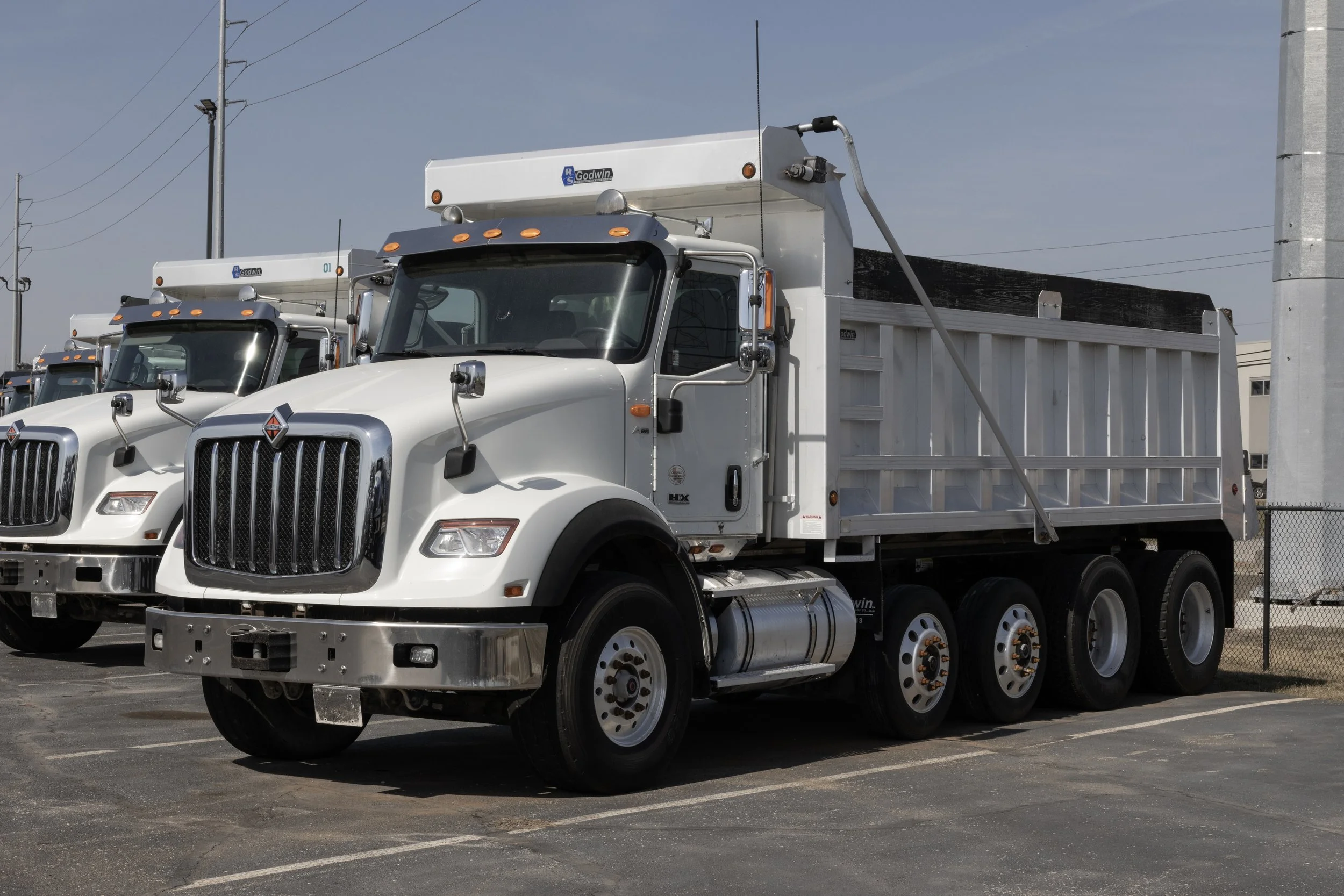
-
Advantages:
• General hauling — dirt, gravel, asphalt, sand — especially for smaller to mid-size jobs, residential work, and sites with tighter access.
More maneuverable (shorter wheelbase), easier to navigate tight job sites and residential streets, generally less expensive to purchase, operate, and maintain.
Trade-offs: Lower payload capacity means more trips are needed to move the same amount of material compared to a tri-axle or quad-axle.
Tri-Axle Dump Truck
Advantages:
Higher legal weight capacity GVW than a tandem, allowing more material per load under road weight limit regulations.
Larger construction jobs, highway work, and hauls where reducing the number of trips saves time and money.
More payload per trip, better fuel/time efficiency on bigger jobs.
Trade-offs: Longer wheelbase reduces maneuverability in tight spaces; higher purchase and maintenance costs (more tires, brakes, axle components).
Quad-Axles
Quad-Axle Dump Trucks are built to maximize legal payload capacity and hauling efficiency on large scale jobs — trading some maneuverability for the ability to legally carry more material per trip than tandem or tri-axle trucks.
-
Advantages:
Many quad-axle include a lift axle (also called a "pusher" or "tag" axle) that can be hydraulically raised off the ground when the truck is empty or lightly loaded. This reduces tire wear, improves fuel economy, and tightens the turning radius when full capacity isn't needed.
Higher legal gross vehicle weight (GVW) under state and federal bridge weight formulas.
Highest payload capacity among common dump truck configurations (compared to tandem or tri-axle setups).
Preferred on big commercial, infrastructure, and large-scale projects where maximizing bulk material hauling tonnage per load has a real cost benefit in time and fuel savings with fewer trips per job.
The optional lift axle can be raised when running empty or under light loads — this reduces tire wear, improves fuel economy, and tightens the turning radius when full capacity isn't needed.
Trade-offs:
Longer wheelbase makes it less maneuverable, especially on tight or congested job sites.
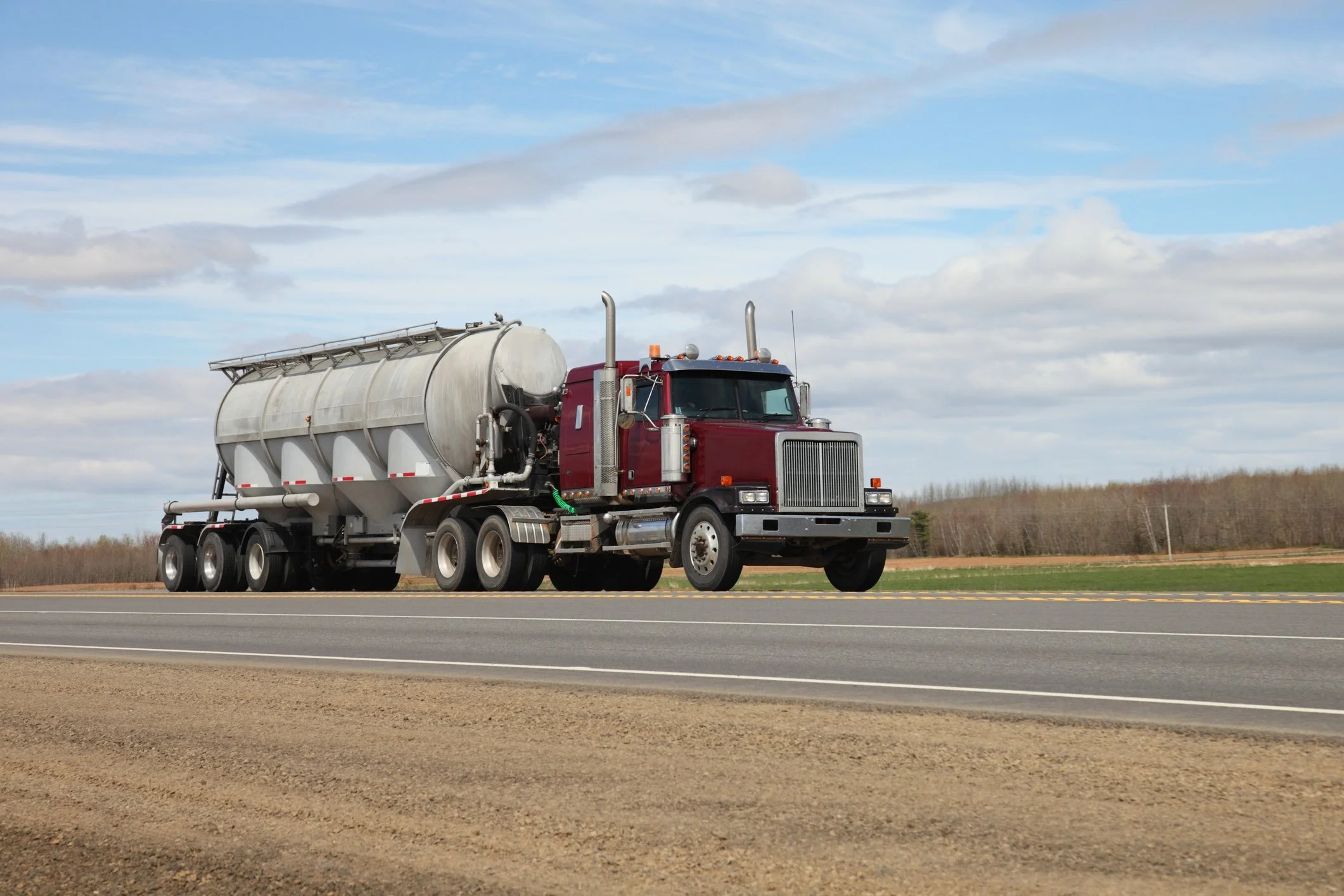
Vacuum Trucks
Vacuum Trucks (also called a "vac truck," "vactor truck," or "vacuum tanker") are heavy-duty industrial vacuum trucks and loaders used at quarries and aggregate material sites for cleaning, spill recovery, and material transfer.
-
Advantages:
Spill and Dust Cleanup: Removing spilled crushed stone, sand, gravel, and fine aggregate dust that accumulate around conveyors, crushers, screens, and loading hoppers.
Tunnels and Sump Maintenance: Clearing out blocked extraction tunnels, drainage sumps, and settling ponds filled with wet slurry or mud.
Reduced Downtime: Vacuum systems can recover large volumes of spilled material quickly without needing to shut down major processing lines for manual shoveling.
Dust Control: Enclosed pneumatic suction limits airborne crystalline silica and aggregate dust compared to traditional sweeping or scraping.
Material Reclamation: Sucked-up aggregates or usable stone dust can often be recycled back into the processing stream or safely dumped into transport containers.
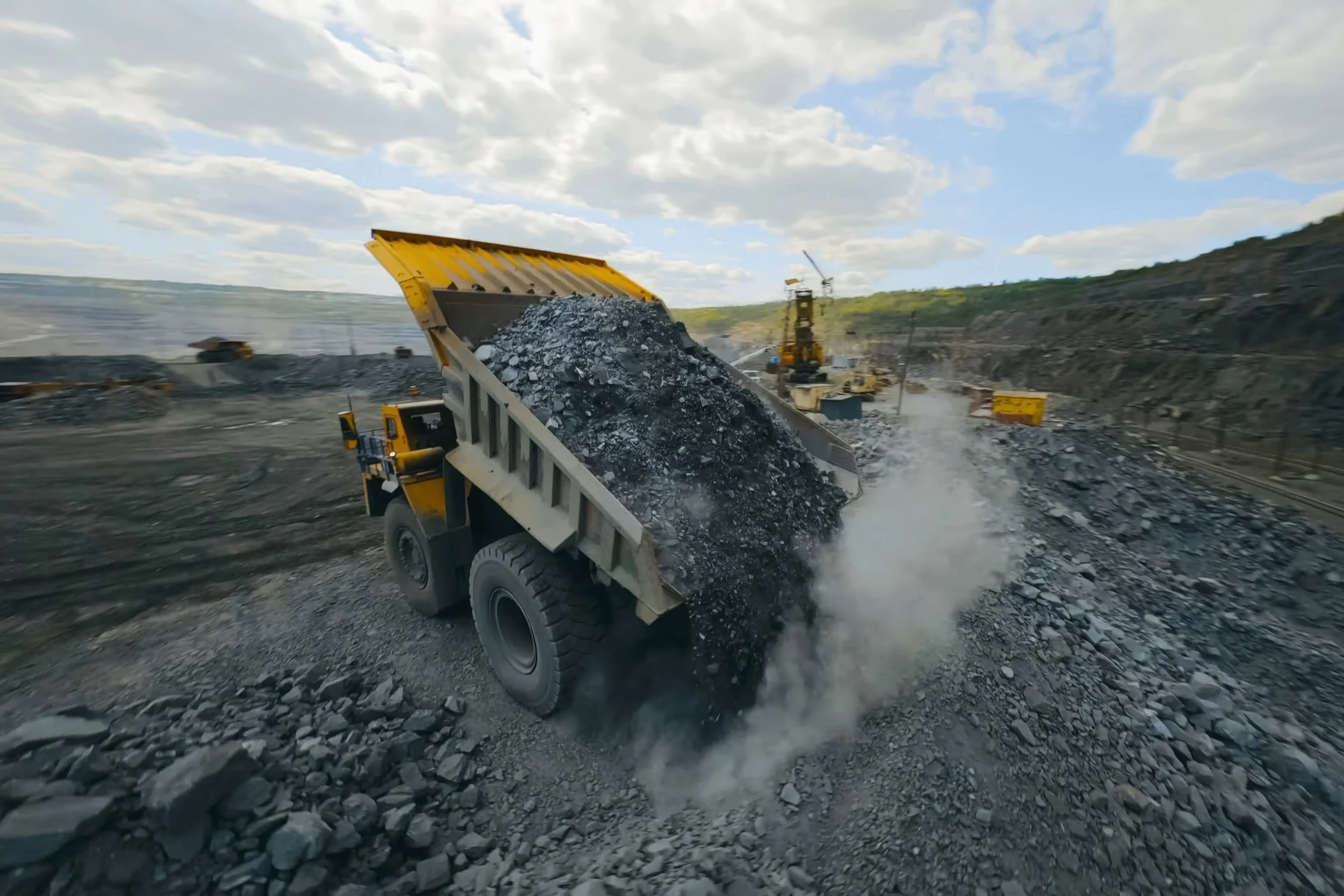
Haul Trucks
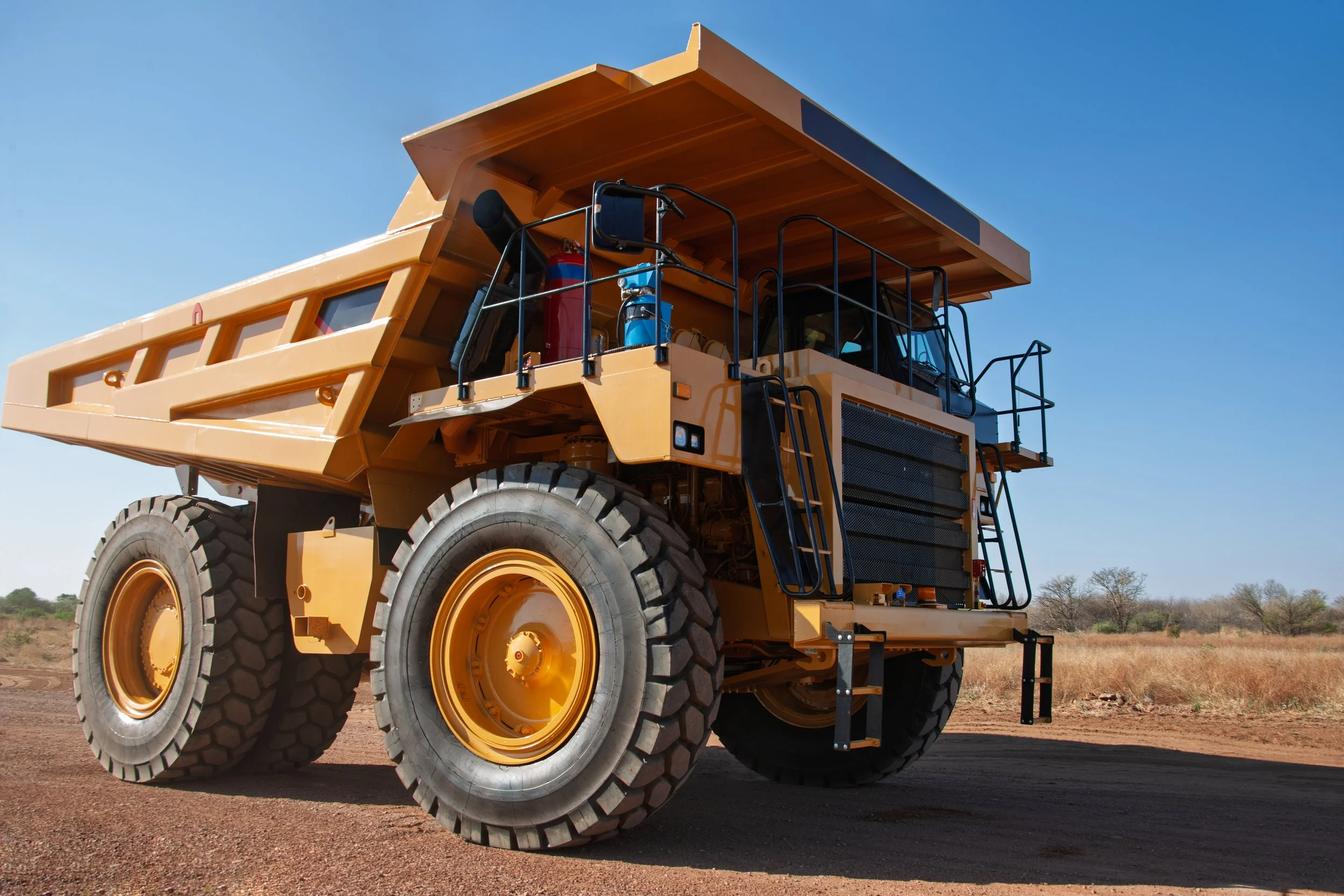
Haul Trucks are heavy-duty, dump-bed design, off-road vehicles purpose built specifically for one job, efficiently hauling enormous quantities of bulk material — rock, stone, gravel, ore, overburden, or aggregate — over short to medium distances across rough job-site terrain at large-scale mining, quarrying, and heavy civil construction sites, but are strictly limited to off-road use.
-
Advantages:
Massive size and capacity: Extremely high payload capacity per trip, ranging from smaller articulated models carrying 20–40 tons up to giant rigid-frame mining trucks capable of hauling 200–400+ tons in a single load, reducing the number of loads needed to move large volumes of material.
Rugged construction: Built with reinforced frames, oversized tires, and heavy-duty suspension systems to handle rough, uneven terrain and constant heavy loading/unloading cycles.
Comfort and Safety: Often designed with operator comfort and safety systems (cameras, collision-avoidance tech) given their size and blind spots.
Trade-offs:
Cannot be driven on public roads — must be transported to site or assembled/disassembled for relocation.
Requires wide, well-maintained haul roads on-site to operate safely and efficiently.